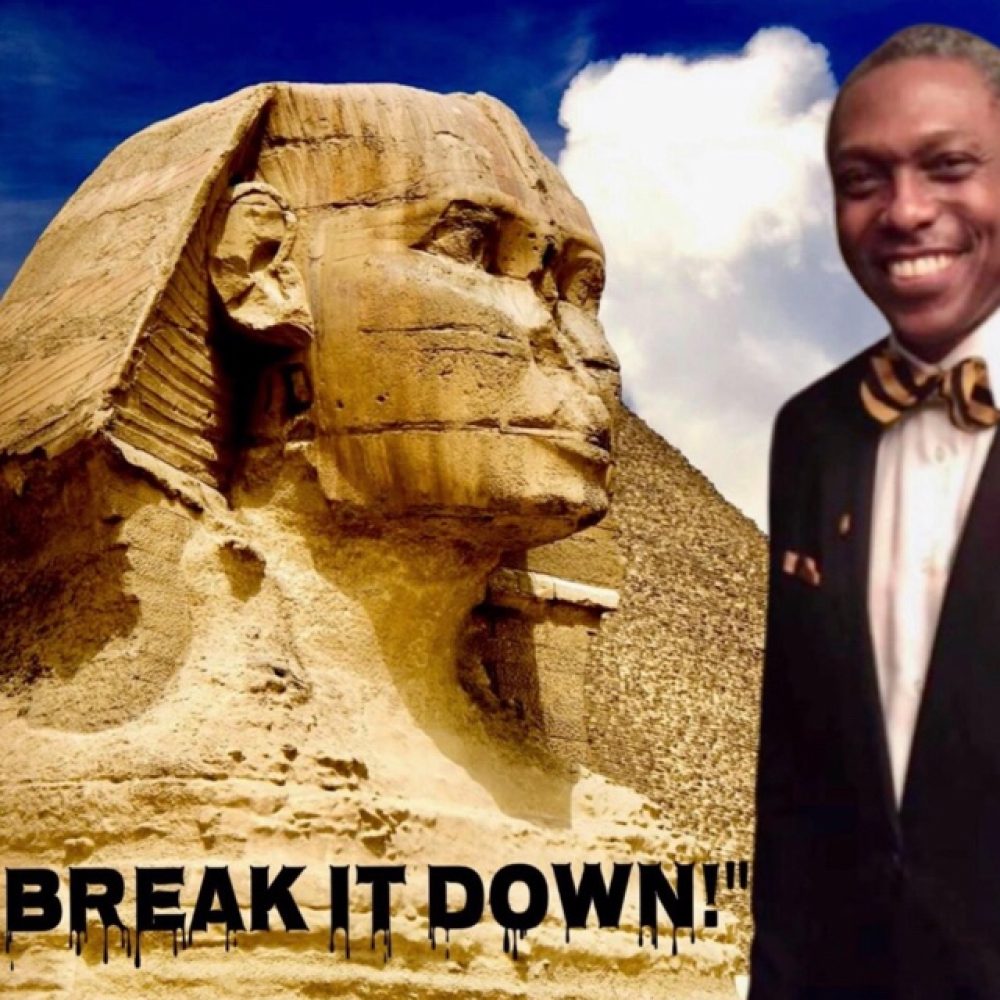
BREAK IT DOWN!
During 1966, the American comedian Lenny Bruce said he was arrested for saying 9 words. In 1972 comedian George Carlin released his fourth stand-up album, Class Clown. One track of the album featured a track, “Seven Words You Can Never Say on Television,” a monologue in which he identified words that to his amazement, couldn’t be used, regardless of context. Carlin was arrested for disturbing the peace when he performed the routine at a show at Summerfest in Milwaukee in 1972. In case you’re wondering, Bruce’s list included all seven of the words on Carlin’s list. You can use your imagination or conduct a web search. I won’t cite the words from either list here. But I digress.
Suffice it to say, “This ain’t 1966, or even 1972. Public discourse in general, and political discourse in particular has come a long way, or perhaps more aptly put, devolved in an extraordinarily crude way. In the hierarchy of American politics, no position occupies a higher station than that of POTUS. Since 2015, any comprehensive discussion about the American presidency has at least tangentially included Donald Trump.
As we contemplate the state of the country, and how we communicate, one with another, it’s impossible to ignore the Trump-effect. Donald Trump has frequently drawn media attention and public scrutiny for using blunt, unfiltered, and crude language during campaigns, interviews, and rallies. The result has affected conversation at large, for sure, but has weighed directly on the dynamics of conversations around politics, whether those conversations involve citizens, candidates, or office holders.
Notable Crude or Provocative Remarks attributed to Donald Trump:
- “Grab ’em by the pussy” (2005 / Leaked 2016)
- Context: Captured on a hot microphone during an Access Hollywood recording while discussing women and fame, Trump was recorded using vulgar terminology to describe non-consensual sexual grabbing. He later issued a video apology, characterizing the comments as “locker room talk.”
- “Shove it up their ass” (2026)
- Context: While campaigning for Republican midterms in Ohio, Trump urged supporters to vote and colorfully remarked to the rally crowd that Republicans would “shove it up their ass, ok?” if they scored major legislative or electoral victories.
- “Shithole countries” (2018)
- Context: During an Oval Office meeting on immigration with bipartisan lawmakers, Trump questioned why the U.S. should accept immigrants from “shithole countries” in Africa and Haiti, sparking widespread domestic and international condemnation. Trump disputed the exact wording while acknowledging he used tough language.
- “Bleeding out of her wherever” (2015)
- Context: Following the August 2015 Republican primary debate moderated by Megyn Kelly, Trump complained about her questioning, saying of Kelly, “You could see there was blood coming out of her eyes, blood coming out of her wherever,” a comment widely interpreted as a crude allusion to menstruation.
- “Horseface” (2018)
- Context: In a post on social media attacking adult film actress Stormy Daniels (Stephanie Clifford) after a federal judge dismissed her defamation lawsuit against him, Trump referred to her as “Horseface.”
- “Low-IQ individual” / Insults directed at appearance and intellect (Various years)
- Context: Throughout his political career, Trump has regularly used demeaning personal nicknames and crude descriptions for rivals and critics—such as calling various political opponents “dog,” “fat,” “low-IQ,” or mocking physical traits.
- “She does not have a look” / Comments on Carly Fiorina (2015)
- Context: In a Rolling Stone profile discussing primary opponent Carly Fiorina, Trump remarked, “Look at that face! Would anyone vote for that? Can you imagine that, the face of our next president?” which critics called a crude personal attack on her appearance.
- “He’s not a war hero. He was a war hero because he was captured. I like people who weren’t captured.” (2015)
- Context: Speaking at the Family Leader summit in Iowa about late Senator John McCain, Trump dismissed McCain’s status as a respected Vietnam War prisoner of war, a remark considered crass and inappropriate by veterans’ groups and politicians across the spectrum.
- “We have no economy. We have no oil. We have nothing.” (Quoting/mocking foreign officials) (2026)
- Context: Trump frequently uses dramatic, exaggerated, and sometimes coarse vernacular when mimicking or describing foreign leaders or adversaries to mock their economic or military struggles.
- “Your countries are going to hell” (2025)
- Context: In unscripted remarks at international forums like the United Nations, Trump used blunt, apocalyptic phrasing to tell foreign representatives that their domestic policies were driving their nations “to hell”.
Perspectives on the Rhetoric
- Critics and Opponents argue that such language degrades the dignity of public office, normalizes misogyny, incites division, and violates traditional norms of presidential communication.
- Supporters and Defenders view the remarks as evidence of authenticity, saying Trump speaks candidly like an “outsider” rather than a polished, politically correct career politician.
In summary, to use a popular idiom, the genie is out of the bottle. Rhetoric in political circles has always been subject to being supercharged. But without a doubt, the tenor, texture, and range of what equates to supercharged rhetoric in 2026 is on a discernibly different level than pre-2015. While there are things Donald Trump may not be responsible for, directly, or indirectly, as the titular Leader of the Free World, it’s fair to say his behavioral eccentricities have been central in moving the needle in political discourse, especially in the United States. Shout out to our very own stable genius. So, you tell me…“Is the era of civil political discourse dead?”
I’m done; holla back!
Read my blog anytime by visiting http://thesphinxofcharlotte.com. Find a new post each Wednesday.
To subscribe, click Follow in the bottom right-hand corner of my Home Page, enter your email address in the designated space, and click “Sign me up.”
Subsequent editions of “Break It Down” will be mailed to your inbox.
https://en.wikipedia.org/wiki/Seven_dirty_words
The formulation of this post was augmented by the use of AI.

