Your Vote is Your Voice: Make a Plan, Make Your Vote Count

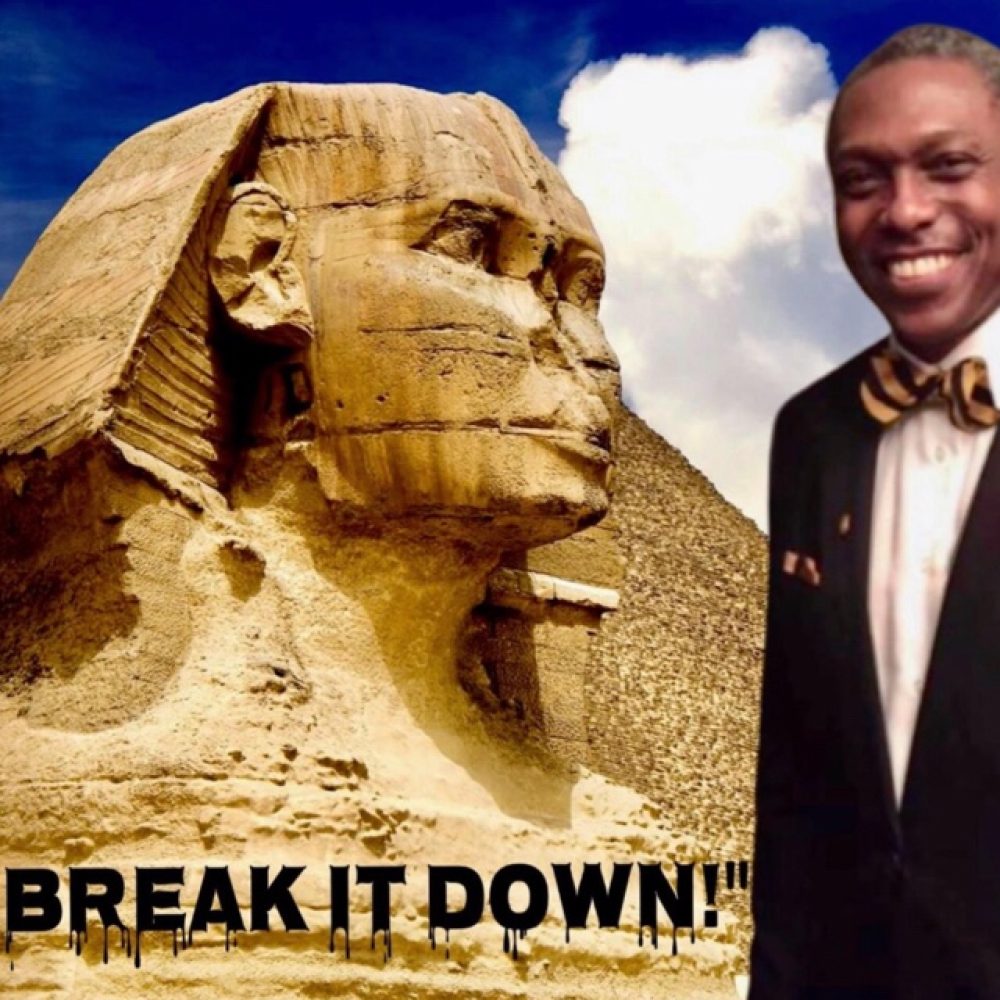
BREAK IT DOWN!

By the time I post in this space again, the American 2026 Election will be history; one way or another. While there will certainly be debates, if not outright legal challenges, the votes will have been cast, and absent some variation of the Madman Theory, most races will have been settled.

As we rapidly approach D-Day, I suppose in actuality, E-Day, there’s a hint of change in the air. Maybe it will come to fruition, maybe not. I’m no pollster. but I am a voter. I cast my vote October 15, the first day of Early Voting in NC. Moreover, if you haven’t done so already, I urge you to do so.

After all, your vote matters only if you make sure it is cast. Work schedules change, transportation falls through, lines grow long, family responsibilities arise, and uncertainty about where or when to vote can become a last-minute barrier. Do not leave your voice to chance. Every eligible voter should make a practical plan to vote—during early voting or on Election Day—and commit to following it. In North Carolina, early voting ends Saturday, October 31, and across the country, Election Day is Tuesday, November 3. Wherever you live, planning now is the surest way to turn your intention into action.

Start with reliable information today. Confirm your registration status, identify your polling place or early-voting site, review voting hours, and learn what identification or documentation may be required. Study the ballot in advance so unfamiliar offices or ballot measures do not create confusion under pressure. Then write down the exact date, location, and time you intend to vote. Choose a backup date and location as well. A specific plan is far more powerful than a vague promise. Weather, illness, or an unexpected obligation are examples of issues that may pop up and threaten to interfere with your voting.

If early voting is available, use that flexibility instead of assuming Election Day will go perfectly. Voting early lets you choose a time that fits work, school, caregiving, or transportation needs, and it reduces the risk that one emergency will silence your voice. It may also leave time to resolve questions about registration or eligibility. But act promptly: locations and schedules can differ from Election Day arrangements, and deadlines vary by state…and time is running out. Check official state or local election information. Do not rely on rumors, forwarded messages, and unverified social-media posts.

In the event Election Day is your best option, prepare for it with equal determination. Decide when you will leave, how you will reach the correct polling place, and how much time you can allow for a line. Arrange transportation, childcare, or a work-schedule adjustment before the day arrives. Bring required identification, keep election-office contact information available, and learn the rules about remaining in line when polls close. Ask a trusted friend or family member to be your accountability partner—and offer to return the favor. A reminder, a check-in, or a shared ride can be the difference between intending to vote and actually voting.

A strong voting plan does more than protect one ballot; it strengthens the entire community. Talk with others about how they aim to get to the polls—not for whom they plan to vote. Share official resources, coordinate transportation, and encourage employers and families to make time for participation. Respect every voter’s independence and privacy while helping remove barriers for people with disabilities, older adults, first-time voters, and those facing language or transportation challenges. When communities solve practical problems together, more citizens can make themselves heard.

Do not wait for a perfect moment to vote; create the moment by making your plan now, if you haven’t already voted. Verify the facts. Choose your date, time, and location. Prepare what you need. Set a reminder, arrange support, and craft a backup plan. Then follow through. Whether you vote early or on Election Day, your preparation protects your opportunity to participate in the American experiment by exercising your franchise even when life becomes unpredictable.

Democracy depends not only on possessing the right to vote, but on executing it. Make your plan today, help someone else make theirs, and show up ready to make your voice count.

Your Voting Plan Checklist:

  • Confirm your registration status and voting eligibility.
  • Verify your polling place or early-voting location and hours.
  • Choose a specific date and time—and identify a backup plan.
  • Review the ballot and prepare any required identification.
  • Arrange transportation, childcare, or time away from work.
  • Set a reminder and ask an accountability partner to check in.

The clock is ticking. In North Carolina, only four days of early voting remain. All over America, Tuesday is Election Day. It has become fashionable to label every current election the most consequential of our lifetime. Seriously, if you are alive, and in possession of even a basic level of sapience, you know what is at stake. By all means, do your civic duty…and do it with the quickness. ”Your Vote is Your Voice: Make a Plan, Make Your Voice Count!”

I’m done; holla back!

Read my blog anytime by visiting http://thesphinxofcharlotte.com. Find a new post each Wednesday.

To subscribe, click Follow in the bottom-right corner of my home page, enter your email address, and click “Sign me up.” Subsequent editions of “Break It Down” will be delivered to your inbox.

The formulation of this post was augmented by the use of AI.

Be Careful What You Ask For: White House Fraud Inquiry Elicits Flood of Trump-Related Examples

BREAK IT DOWN!

Yesterday, President Donald Trump and Vice President JD Vance announced a $25 million initiative encouraging the public to report suspected fraud involving federal programs and taxpayer dollars.

On its face, the announcement seemed straightforward: invite citizens to identify waste, abuse, and misuse of government funds. But when the White House’s official X account asked the public for examples of fraud, the response quickly expanded into a broader debate about accountability, political messaging, and public trust.

The administration likely expected the Fraud Whistleblower Incentive Program (WHIP) to reinforce its political message and portray the president as a champion of fiscal accountability. Instead, critics used the prompt to spotlight controversies, allegations, lawsuits, and disputed financial claims associated with Trump and members of his political orbit.

When the Message Escaped Its Intended Frame

Operating through the White House Task Force to Eliminate Fraud and a dedicated portal at fraud.gov, the initiative offers financial rewards of up to $30,000—or a 1% commission in exceptionally large cases—for reports involving stolen or misused taxpayer funds. It sounded plausible, perhaps even like a proverbial slam dunk.

But hold your horses. Rather than producing a wave of examples that supported the administration’s narrative, the post drew replies invoking Trump’s own record. The episode showed how quickly an official message can move beyond the control of those who publish it.

What Users Highlighted

Users flooded the comments and quote-posts with three recurring themes:

  • Past legal judgments. Commenters cited earlier civil fraud rulings involving Trump, his businesses, and the Trump Foundation.
  • Claims of selective enforcement. Critics argued that the program could become a political weapon rather than an impartial enforcement tool.
  • Instructions for reporting Trump-related concerns. Some users circulated guidance on using the new government portal to submit allegations involving the president’s financial conflicts of interest.

Although the administration presented WHIP as a sweeping, whole-of-government effort to stop improper payments before they occur, the rollout became a digital battleground. Political opponents seized on the irony of a fraud initiative promoted by Trump and redirected the spotlight toward him.

Why the Post Backfired

Social media rewards immediacy and confrontation. A short question may appear simple, but readers interpret it through the broader record of the institution or public figure asking it. Here, the request for fraud examples gave critics an opening to raise matters they believed the administration had deflected or minimized.

The replies also blurred important distinctions. Some pointed to court cases and official findings; others repeated unproven allegations or partisan claims. That mixture made documented facts harder to separate from speculation, but it clearly exposed the depth of public distrust.

Institutional Authority and Ambiguous Language

The episode underscored the risks of using an official government account as a political communication tool. A White House account carries institutional authority, even when its posts resemble campaign rhetoric. When such an account asks a broad question without defining its terms, the public may turn that question back on the administration—as many users did.

The word “fraud” itself added to the confusion. It can refer to a criminal conviction, a civil finding, an accusation, or simply a belief that someone has misled the public. Without a precise definition, the discussion was almost certain to become expansive and contentious.

Competing Interpretations

Supporters of the administration may see the replies as evidence that opponents will attack the president regardless of the subject. Critics may instead view the flood of Trump-related examples as a form of public accountability.

Both interpretations reflect the increasingly interactive nature of political communication. Officials are no longer speaking only to journalists or passive audiences. They are addressing millions of people who can instantly challenge, reinterpret, or redirect a message.

The Broader Lesson

The incident offers a larger lesson about credibility in public institutions. If leaders want citizens to take fraud claims seriously, they must present specific evidence, distinguish allegations from established findings, and apply standards consistently. Otherwise, a message intended to inspire confidence may instead invite accusations of hypocrisy.

In a polarized environment, credibility depends not only on the strength of a claim, but also on whether the public believes the same rules apply to allies and opponents.

Conclusion

Ultimately, the reaction to the White House post was about more than a single social media exchange. It reflected the continuing struggle over political accountability and showed that many users were unwilling to accept a narrow definition of misconduct when they believed the administration’s own record was both relevant and markedly flawed.

Whether the replies changed anyone’s mind is uncertain—and not the only point. The clearer lesson is this: when public officials broadly ask for examples of wrongdoing, especially in language seemingly aimed at political opponents, the answers may travel far beyond the intended targets. The inquiry can backfire, redirecting scrutiny toward the very people or institutions that initiated it. “Be Careful What You Ask For: White House Fraud Inquiry Elicits Flood of Trump-Related Examples!“

I’m done; holla back!

Read my blog anytime by visiting http://thesphinxofcharlotte.com. Find a new post each Wednesday.

To subscribe, click Follow in the bottom-right corner of my home page, enter your email address, and click “Sign me up.” Subsequent editions of “Break It Down” will be delivered to your inbox. For more information on the subject, see the link below.

https://abc7ny.com/story/trump-vance-announce-25m-whistleblower-program-encourage-public-report-alleged-fraud/19961455

The formulation of this post was augmented by the use of AI.

Katie Zacharia: Welcome to the Arena

BREAK IT DOWN!

Last Friday, Katie Zacharia became the nation’s 37th White House Press Secretary (WHPS).Yesterday, four days into the gig, she had her first briefing at the podium. According to one news source, it lasted 14 minutes. 

As anticipated, on the occasion of a press secretary’s first briefing, all eyes, at least a whole lot of eyes, including the media writ large, were on the newbie. Based on a wide range of reviews, the briefing was notable less for its length than for what its brevity revealed about the communication strategy Zacharia may bring to the role. 

Appearing before reporters on yesterday, Zacharia spent roughly fourteen minutes at the lectern, delivered prepared remarks, and answered questions from only three (conservative, Trump-friendly) reporters. The debut, not surprisingly, showed her to be a disciplined advocate for President Donald Trump’s agenda, and a staunch admirer of a man she has long wanted to work for. Concomitantly, it also prompted questions about transparency, accessibility, and her readiness for the pressures of the briefing room.

Zacharia opened by emphasizing the administration’s economic and political priorities. She highlighted claims about wages, prescription drug prices, energy production, manufacturing, border security, and the president’s campaign travel ahead of the midterm elections. Her central message was consistent: she viewed her responsibility as expanding and reinforcing the president’s agenda rather than becoming an independent public voice. She also endorsed continuing the briefing room’s “new media” seat, signaling that the administration would double down on its efforts to reimagine access to the White House briefing room.

Arguably, the single moment of enlightenment came when Zacharia confirmed that the administration had asked U.S. Ambassador to Greece Kimberly Guilfoyle to resign. That revelation gave the abbreviated session one element of genuine news value. 

Conversely, Zacharia deferred a question about whether the United States had stopped sharing intelligence with Ukraine, promising to provide an answer later. The contrast between a major personnel announcement and an unanswered foreign-policy question illustrated both the strengths and limits of her tightly controlled debut.

Her presentation also became part of the story. Zacharia spoke at length from prepared notes, showed occasional signs of nervousness, and briefly misspoke by referring to her husband as “my president” before correcting herself. While some errors are understandable in a first appearance, the press secretary’s role magnifies small mistakes because the position depends on precision and composure. 

More significant than the verbal slip was her decision to end the session after a small number of questions. Critics saw that choice as evidence of limited openness, and frankly, not being ready for prime time, while some supporters argued that the appearance efficiently established her priorities and avoided unnecessary distraction.

Ultimately, Zacharia introduced themes likely to define her tenure: loyalty to the president, reliance on prepared messaging, support for alternative media access, and control over exchanges with journalists. It should be noted, however, a press secretary is judged not only by message discipline but also by willingness to face sustained questioning and by clarifying government decisions. One brief appearance is not necessarily determinative of how Zacharia will perform over time. It did establish a clear challenge. To build credibility beyond the administration’s supporters, she will need to combine advocacy with detailed answers, longer engagement, and consistent follow-through on questions she cannot answer immediately.

To that end, her first briefing was therefore not a complete and utter failure, but it certainly will not go down as anyone’s idea of an unqualified success. 

It delivered one major announcement and likely offered a glimpse of her overall approach. Yet its short duration left the public with an incomplete picture of her command of policy and ability to manage an adversarial press corps. As is the case with many people who have the occasion to speak for President Trump, it is not uncommon to have an audience of one. In future briefings, it will be incumbent upon Zacharia to demonstrate her debut was simply a cautious beginning; not an enduring model of how the White House intends to communicate. ”Katie Zacharia: Welcome to the Arena!”

I’m done; holla back!

Read my blog anytime by visiting http://thesphinxofcharlotte.com. Find a new post each Wednesday.

To subscribe, click Follow in the bottom right-hand corner of my Home Page, enter your email address in the designated space, and click “Sign me up.”

Subsequent editions of “Break It Down” will be mailed to your inbox.

The formulation of this post was augmented by the use of AI.

Is the Era of Civil Political Discourse Dead?

BREAK IT DOWN!

During 1966, the American comedian Lenny Bruce said he was arrested for saying 9 words. In 1972 comedian George Carlin released his fourth stand-up album, Class Clown. One track of the album featured a track, “Seven Words You Can Never Say on Television,” a monologue in which he identified words that to his amazement, couldn’t be used, regardless of context. Carlin was arrested for disturbing the peace when he performed the routine at a show at Summerfest in Milwaukee in 1972. In case you’re wondering, Bruce’s list included all seven of the words on Carlin’s list. You can use your imagination or conduct a web search. I won’t cite the words from either list here. But I digress. 

Suffice it to say, “This ain’t 1966, or even 1972. Public discourse in general, and political discourse in particular has come a long way, or perhaps more aptly put, devolved in an extraordinarily crude way. In the hierarchy of American politics, no position occupies a higher station than that of POTUS. Since 2015, any comprehensive discussion about the American presidency has at least tangentially included Donald Trump.

As we contemplate the state of the country, and how we communicate, one with another, it’s impossible to ignore the Trump-effect. Donald Trump has frequently drawn media attention and public scrutiny for using blunt, unfiltered, and crude language during campaigns, interviews, and rallies. The result has affected conversation at large, for sure, but has weighed directly on the dynamics of conversations around politics, whether those conversations involve citizens, candidates, or office holders.

Notable Crude or Provocative Remarks attributed to Donald Trump:

  1. “Grab ’em by the pussy” (2005 / Leaked 2016)
    1. Context: Captured on a hot microphone during an Access Hollywood recording while discussing women and fame, Trump was recorded using vulgar terminology to describe non-consensual sexual grabbing. He later issued a video apology, characterizing the comments as “locker room talk.”
  2. “Shove it up their ass” (2026)
    1. Context: While campaigning for Republican midterms in Ohio, Trump urged supporters to vote and colorfully remarked to the rally crowd that Republicans would “shove it up their ass, ok?” if they scored major legislative or electoral victories.
  3. “Shithole countries” (2018)
    1. Context: During an Oval Office meeting on immigration with bipartisan lawmakers, Trump questioned why the U.S. should accept immigrants from “shithole countries” in Africa and Haiti, sparking widespread domestic and international condemnation. Trump disputed the exact wording while acknowledging he used tough language.
  4. “Bleeding out of her wherever” (2015)
    1. Context: Following the August 2015 Republican primary debate moderated by Megyn Kelly, Trump complained about her questioning, saying of Kelly, “You could see there was blood coming out of her eyes, blood coming out of her wherever,” a comment widely interpreted as a crude allusion to menstruation.
  5. “Horseface” (2018)
    1. Context: In a post on social media attacking adult film actress Stormy Daniels (Stephanie Clifford) after a federal judge dismissed her defamation lawsuit against him, Trump referred to her as “Horseface.”
  6. “Low-IQ individual” / Insults directed at appearance and intellect (Various years)
    1. Context: Throughout his political career, Trump has regularly used demeaning personal nicknames and crude descriptions for rivals and critics—such as calling various political opponents “dog,” “fat,” “low-IQ,” or mocking physical traits.
  7. “She does not have a look” / Comments on Carly Fiorina (2015)
    1. Context: In a Rolling Stone profile discussing primary opponent Carly Fiorina, Trump remarked, “Look at that face! Would anyone vote for that? Can you imagine that, the face of our next president?” which critics called a crude personal attack on her appearance.
  8. “He’s not a war hero. He was a war hero because he was captured. I like people who weren’t captured.” (2015)
    1. Context: Speaking at the Family Leader summit in Iowa about late Senator John McCain, Trump dismissed McCain’s status as a respected Vietnam War prisoner of war, a remark considered crass and inappropriate by veterans’ groups and politicians across the spectrum.
  9. “We have no economy. We have no oil. We have nothing.” (Quoting/mocking foreign officials) (2026)
    1. Context: Trump frequently uses dramatic, exaggerated, and sometimes coarse vernacular when mimicking or describing foreign leaders or adversaries to mock their economic or military struggles.
  10. “Your countries are going to hell” (2025)
    1. Context: In unscripted remarks at international forums like the United Nations, Trump used blunt, apocalyptic phrasing to tell foreign representatives that their domestic policies were driving their nations “to hell”.

Perspectives on the Rhetoric

  • Critics and Opponents argue that such language degrades the dignity of public office, normalizes misogyny, incites division, and violates traditional norms of presidential communication.
  • Supporters and Defenders view the remarks as evidence of authenticity, saying Trump speaks candidly like an “outsider” rather than a polished, politically correct career politician.

In summary, to use a popular idiom, the genie is out of the bottle. Rhetoric in political circles has always been subject to being supercharged. But without a doubt, the tenor, texture, and range of what equates to supercharged rhetoric in 2026 is on a discernibly different level than pre-2015. While there are things Donald Trump may not be responsible for, directly, or indirectly, as the titular Leader of the Free World, it’s fair to say his behavioral eccentricities have been central in moving the needle in political discourse, especially in the United States. Shout out to our very own stable genius. So, you tell me…“Is the era of civil political discourse dead?”

I’m done; holla back!

Read my blog anytime by visiting http://thesphinxofcharlotte.com. Find a new post each Wednesday.

To subscribe, click Follow in the bottom right-hand corner of my Home Page, enter your email address in the designated space, and click “Sign me up.”

Subsequent editions of “Break It Down” will be mailed to your inbox.

https://en.wikipedia.org/wiki/Seven_dirty_words

The formulation of this post was augmented by the use of AI.