How voter urgency could reshape closer races–if determination becomes participation.
Rather than create a post on election results, which are dynamic, and in a few instances, still unfolding, I opted to focus on a number of factors and fundamentals that led to specific results. The most revealing story of the 2026 midterms may unfold in places routinely dismissed as politically settled. Black voters concerned about diminished rights and economic opportunity could bring new urgency to overlooked contests. Yet wanting to vote and actually voting are two different things. The potential surprise lies in whether voters can turn urgency into ballots despite obstacles to access.
That does not mean every red state will turn blue. It means familiar partisan labels may conceal the potential for change, especially when frustration over representation intersects with household costs and helps build broader coalitions.
Alabama illustrates that possibility. Capital B reports that Representative Shomari Figures faces reelection in a redrawn district whose Black voting-age population has fallen from roughly 49 percent to 40 percent. The new boundaries make his path harder but also make turnout and coalition building more consequential. Black voters need not form a district majority to help determine its winner. If participation rises and support crosses racial lines, a seemingly unfavorable map could become a test of whether organizing can overcome political geography.
Beyond district lines, the stakes include rights and opportunity. The Black Women’s Roundtable’s 2026 survey finds that 85% of respondents are concerned about the Supreme Court decision weakening Voting Rights Act protections; its report also describes weakened civil rights enforcement and cuts to diversity initiatives. The 19th reports employment losses among Black women, with federal workforce cuts contributing to the disruption. These pressures could strengthen the motivation to vote and favor candidates promising voting protections, anti-discrimination enforcement, and employment security. But motivation does not ensure participation: financial strain after job loss could make transportation or childcare harder to afford, while voting-access barriers could obstruct even determined voters.
In Tennessee, the data center controversy adds another dimension. Capital B reports that, after Memphis was divided among three congressional districts, Democrat Justin J. Pearson sought rural voters beyond the city while criticizing its large data center. Concerns about who benefits from development and who pays for electricity infrastructure could connect Black mobilization with wider dissatisfaction. FactCheck.org finds opposition to data centers crossing party lines, although their electricity-price effects vary by location. The electoral force lies in demands for accountability, not in assuming every rate increase has the same cause.
Elsewhere, participation itself challenges conventional expectations. Capital B reports unusually high Black voter participation in Louisiana, although Republican Senate candidate Julia Letlow remains favored against Democrat Jamie Davis. In Texas, The Grio describes organizing that deliberately stayed outside the national spotlight. Neither example guarantees an upset. Both suggest that familiar partisan labels and visible campaign activity may miss momentum building within communities.
Growing Hispanic concerns could reinforce that pressure. Pew Research Center finds that 86% of Hispanic registered voters consider the economy very important to their congressional vote. Moreover, one of Trump’s key campaign promises was to close the border. Ultimately, in retrospect, the key take-away is not that he kept his promise, which he did, but the methodology the administration used.. ICE acted as a sledge hammer, instead of a scalpel. American citizens were killed in the streets in full view of cameras, and numerous legal, rather than “illegal” immigrants were deported, and often sent to countries other than their homeland. Many Black folks warned that promises to target felons and violent criminals would turn into fairy dust if Trump were elected again. Sometimes believing requires seeing. Now…we see! Undoubtedly, that’s going to influence some voters.
The Iran war brings foreign policy into household calculations: the Council on Foreign Relations reports that disrupted energy supplies have helped drive higher fuel prices and inflation. Both political parties agree elections have consequences. In this year’s election, perhaps more important in the final analysis, was the President’s promise of no new wars, and his subsequent unilateral decision to stage a non-Congressionally supported war in Iran. The conflict has had a disproportionate impact on the country’s economic distress, and has pummeled Americans, regardless of party affiliation. For voters frustrated by affordability, these pressures could deepen anger at the administration and influence turnout or candidate choices.
Ultimately, electoral influence requires both urgency and a practical path to participation. Anger over diminished rights, lost opportunity, household costs, the Iran war, overt extreme anti-immigrant tactics and data center development may strengthen the desire to vote. Neither Black nor Hispanic voters are politically uniform, and early voting is not a verdict. The surprise may be tighter races rather than wholesale partisan realignment.
President Trump told Republicans to act like he was on the ballot. As I watched Fox News for a few fleeting moments, the theme of the late evening seemed to be a warning for Democrats not to perceive prevailing in one or both Houses of Congress as a mandate. How interesting, considering the view many conservatives held after the 2024 Election was that Trump and the GOP House and Senate had just that. I don’t know what the final numbers will look like. What I do know is, it will not look like what Trump and his Republican allies, including the world’s only trillionaire, envisioned when at Trump’s behest, they initiated a scheme to launch a midterm redistricting effort intended to permanently solidify GOP majorities across the country. Whatever the final tally is, I look to seeing how POTUS responds.
Where margins are narrow, the decisive question is whether voters can act on their concerns—and cast the ballots that change the result. By the time most of you see this post, the vast majority of races will have been called. Best wishes on the outcome you wished…and voted for. ”Black & Hispanic Voters and the Midterms: Rights, Opportunity, and the Ballot”
I’m done; holla back!
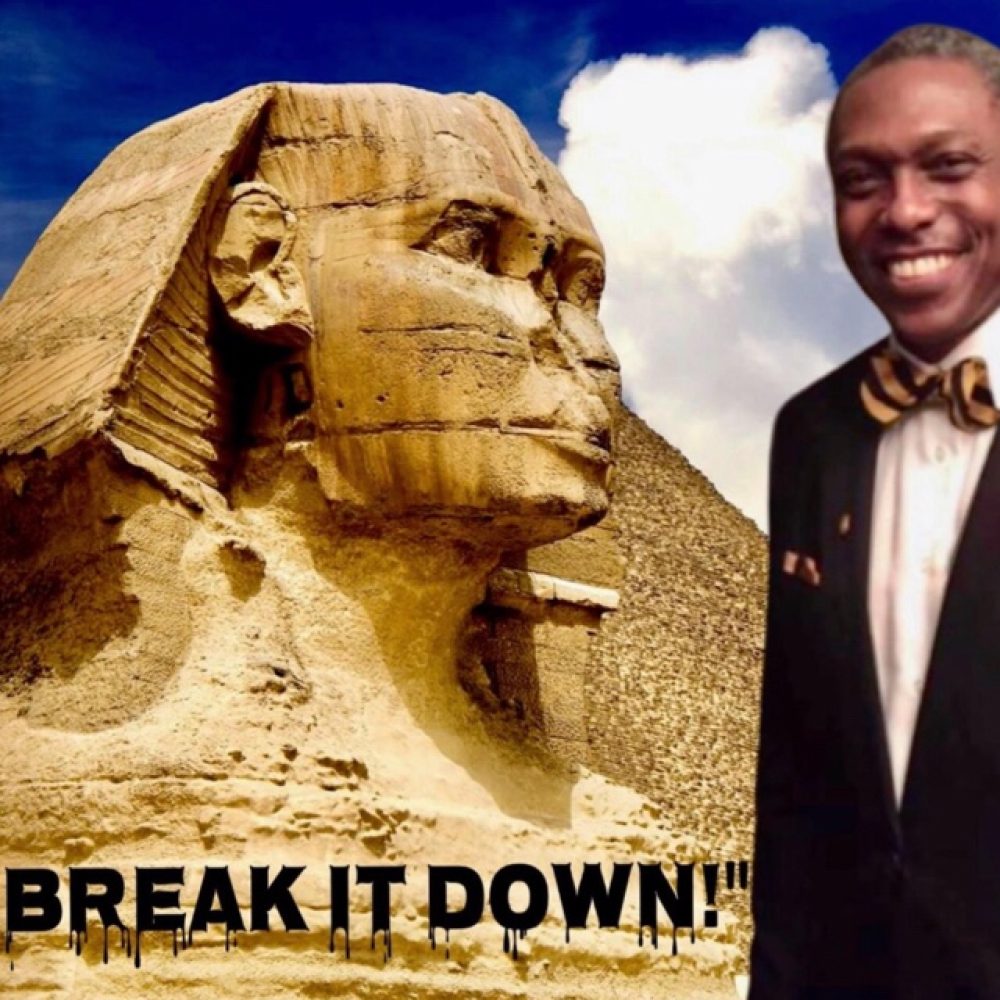
Read my blog anytime by visiting http://thesphinxofcharlotte.com. Find a new post each Wednesday.
To subscribe, click Follow in the bottom-right corner of my home page, enter your email address, and click “Sign me up.” Subsequent editions of “Break It Down” will be delivered to your inbox.
Reporting: Capital B, October 29, 2026; TheGrio, November 2, 2026. Pew Research Center, October 16, 2026. Council on Foreign Relations, October 29, 2026. FactCheck.org, October 29, 2026. Black Women’s Roundtable, September 2026; The 19th, October 28, 2026.
The formulation of this post was aided by the use of AI.

