Faith and Work in Mississippi: Scott Colom and the Blue Tsunami

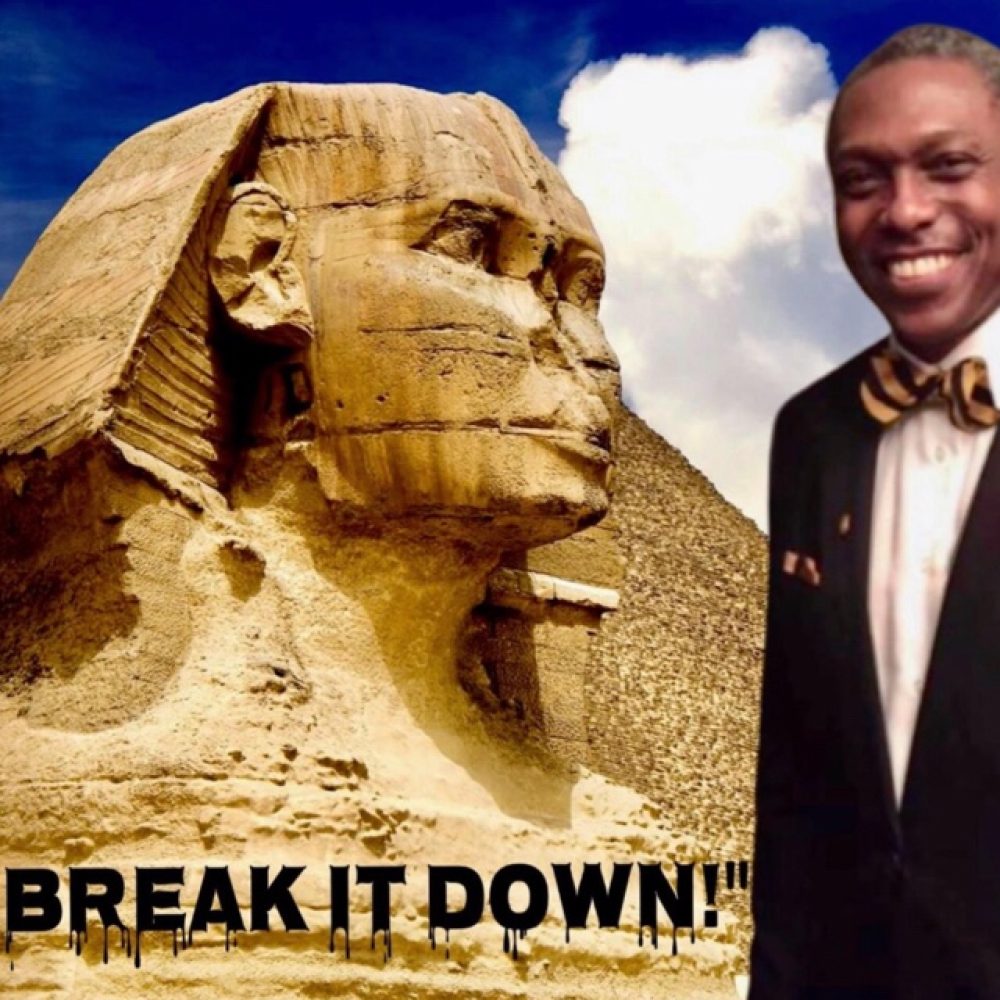
BREAK IT DOWN!

Last night the final Senate race was called. The Associated Press called the race after Mary Peltola’s vote count eclipsed 50%, which if it holds, will enable her to avoid having Rank Choice deployed to determine the outcome. That’s great; next week includes Thanksgiving, and I was not going to make that post a discussion of electoral politics.

The Associated Press (AP) called the race at !0:19 p.m. EST. The Blue Tsunami continues. Of course, the wild card is whether the Trump administration will contest the results. There may still be drama forthcoming. But that will be what it will be.

Overall, Democrats picked up 56 of the 100 Senate seats. They needed a net gain of four to take control of the Chamber. They got 9, including all 4 of those considered closely contested going into Election Day. That leaves Republicans with 44 Senate seats. Thus far, Democrats have claimed 257 of 435 House seats; considerably more than the 218 needed to control the Chamber. There were 46 Red to Blue flips. As of last night Democratic candidates hold slim leads in 3 Red districts, and have a reasonable chance to control as many as 260 House seats. Governorships did not escape the Blue Tsunami. Republicans have held a majority of Governor’s Offices since 2011. That will change in 2027; Democrats won 30 of the 50 States.

Now, let’s train our focus on the outcome of the Senate race in the Magnolia State.

When the AP declared Scott Colom the winner of Mississippi’s U.S. Senate race on November 11, 2026, it ended one of the most improbable contests of the midterm cycle. Colom, a 43-year-old district attorney, unseated Republican incumbent Cindy Hyde-Smith in a state President Trump carried by nearly 23 points in 2024. Official results later confirmed a margin of 8,031 votes out of roughly 950,000 cast.

The history embedded in that margin is considerable. Colom will be Mississippi’s first Black senator since Reconstruction, when Hiram Revels and Blanche K. Bruce held the office, and the first Black senator the state’s voters have ever elected directly. He is also the first Democrat to win a Mississippi Senate seat since John Stennis in 1982, and the first to unseat an incumbent senator in the state since 1942. Fittingly, he opened his victory speech at Tougaloo College by honoring Revels, Medgar Evers, and Fannie Lou Hamer, placing his win in a long lineage of Mississippians who pressed the state toward its promise.

“Faith without works is dead. And we worked this election, y’all.”
— Scott Colom, victory speech at Tougaloo College, November 11, 2026

The path there was anything but conventional. Sen. Hyde-Smith had single-handedly blocked Colom’s nomination to a federal judgeship, unknowingly clearing the way for his candidacy, and ultimately, for her defeat. He campaigned with little help from his party’s national establishment, whose senatorial committee announced a $500,000 investment only six days before Election Day. Colom who held more than 60 town halls, recalled that his first town hall drew fewer than ten people. He eventually spoke with farmers hurt by tariffs, commuters squeezed by gas prices, and patients worried about Medicaid cuts. Strong youth turnout and a grassroots movement worried about the economy and gerrymandering did the rest. On election night he led by just 43 votes; the count continued growing in his favor over the following days.

Colom’s win is also emblematic of the larger “blue tsunami” that swept the 2026 midterms. His was the eighth Senate seat Democrats flipped from Republican control, lifting the party to 55 seats (Alaska being called for Peltola pushed the number of flipped seats to 9, and the total number of senate seats held by Democrats up to 56). Democrats will hold commanding majorities in both chambers in January.

Mississippi mattered symbolically because it sat so far beyond the usual Democratic map. If a candidate could win there, the thinking goes, no region of the country can be written off, and voters’ frustration with the economic climate had become powerful enough to overcome decades of partisan habit.

Yet historians and analysts should resist declaring a permanent realignment. Law professor Matt Steffey, of Mississippi Christian University, called it hard to tell whether the result is an outlier or the start of a trend, and he does not expect another blue wave statewide in 2027. The margin was razor-thin, and Mississippi still has no recount law.

It can be said with confidence that Colom’s victory broke a 44-year drought, reopened a chapter of Black political representation closed since Reconstruction, and proved that sustained, face-to-face organizing can unsettle even the most settled political assumptions. However, it’s important to give Donald Trump some well-deserved credit for having breached his word on multiple fronts.

He and his administration spent two years espousing, implementing, and doubling and tripling down on policies, schemes, and arguably an unprecedented level of corruption that invigorated a spirited opposition, and frankly disincentivized a number of Republicans in general, and MAGA supporters in particular. Trump’s fixation on the tariff game hurt business, cost consumers, and was ultimately largely deemed illegal in a 6-3 Supreme Court decision. He joined Bibi Netanyahu in a war against Iran that caused gasoline and diesel fuel prices to spike, and consumers, including farmers, truckers, and importantly, lots of Trump voters to call for relief. Moreover, he claimed again and again, the war would end in a matter of weeks. After several instances of the war failing to bend to his will, he simply pivoted, re-languaged, and declared the war over…and started referring to the continuation of hostilities as…a conflict. Then, there was the Trump Vanity Project initiative, including the Ball Room (bigger than the actual White House), the Goldening of the White House, the refurbishing of the Qatari “gifted” plane, the Heliport, the proposed Arch, etc., spiraling the national debt, the Health & Human Services Secretary’s assault on American’s health, including anti-vaxxing policies that have led to a growing national measles crisis (a disease formally declared eliminated in the U.S. in the year 2000…a status loss in 2026), and finally, at least the appearance of corruption. Don’t tell the GOP, but Donald J. Trump was the real MVP.

Whether Election ‘26 becomes a turning point will depend on what Democrats build from here. In 2024, Republicans came out of the election giddy with the notion that they had the stick to pummel Democrats with, seemingly, in perpetuity. Two years later, they absorbed a defeat of historic proportion. Therein lies the pitfall Democrats must seek to avoid. It is imperative that the Party figures it out, and governs responsibly and effectively for the next two years, so they are not facing the brutal repudiation the GOP sustained on November 3rd.

One final note of felicitation in closing. On behalf of Alpha Phi Alpha Fraternity Brothers worldwide, of which Brother Colom is a proud member (along with his twin brother Andrew and his father Wilbur), congratulations on your historic accomplishment. ΑΦΑ develops leaders, and you are truly an exemplar of that soon-to-be 120-year tradition of transcendent service. Onward and upward toward the Light. ‘06! 🤙🏿

“Faith and Work in Mississippi: Scott Colom and the Blue Tsunami!”

I’m done; holla back!

Read my blog anytime by clicking the link: http://thesphinxofcharlotte.com. Find a new post each Wednesday.

To subscribe, click on Follow in the bottom right-hand corner of my Home Page at http://thesphinxofcharlotte.com; enter your e-mail address in the designated space, and click on “Sign me up.”

Subsequent editions of “Break It Down” will be mailed to your in-box.

The formulation of this post was aided by the use of AI.

The Eleventh Hour of the Eleventh Day of the Eleventh Month Redux ’26

It’s time to Break It Down!

A week ago yesterday, America experienced an historic election. As I opined last week, the vast majority of the results have been determined. In what pundits are calling a Blue Tsunami, Americans voted in unanticipated numbers for a midterm, and they voted overwhelmingly for Democrats. So much so, until Democrats netted over 40 additional House seats, at least 7 Senate seats, with two still outstanding (Mississippi and Alaska). Democrats are currently leading in both and have a chance to raise their net to 9. In addition, Dems rolled to wins in Governorships, where they now have 29, and a small lead in a 30th. They were able to flip numerous state legislatures.

Interestingly, in past years, Republicans have complained vociferously about the length of time it took California, and frankly any Blue state to count votes, if the results were not known by the end of Election Day. This year, two Red States, Mississippi and Alaska still have outstanding races. Do you know what I haven’t heard? I haven’t heard a single Republican from Donald Trump to Don on Main Street complain about those Elections not being called yet. Do you know why? Because with their candidates trailing, as long as the Election hasn’t been called, they still have a chance, even if it’s an outside one, to overtake the lead and win the races. Nevertheless, one could argue, this election is what our beloved veterans fought/fight for. But I digress.

Seventeen years ago, I wrote a post in recognition of Veteran’s Day, and the service personnel we as a nation honor on that day. In 2009, and again in 2015 when I reprised this post, Veterans Day fell on Wednesday. In 2018, the day fell on Sunday. In 2019, on Monday, in 2020, on Wednesday, in 2021, on Thursday, and in 2022, Friday, 2023, Saturday, and 2024, Monday. Today is Veterans Day. Because of that, I decided once more to edit/re-post the Veteran’s Day Edition of “Break It Down!”

That also means, back to my holiday norm. Many of you may know, or at least faintly recall that I usually alter the blog format to integrate holiday traditions into the discussion. Often holidays are expanded by days away from work, long weekends, travel, and a host of leisure activities. In those cases, I prefer to scale back in recognition that aside from road map directions, GPS instructions, and the like, most of us do very little reading.

As most Americans know, this year marked the 108-year Anniversary of the Armistice that ended World War I, AKA “The Great War,” and/or “The War That Ended All Wars.” Never mind the irony of the war we are currently embroiled in.

At first, the occasion was known as Armistice Day. It later became known as Veterans Day. But what do we really know about this day that has been set aside to honor real American heroes and sheroes?

Well, first, Veterans Day is not Memorial Day, and vice-versa. According to the U.S. Department of Veterans Affairs, Veterans Day is intended largely to honor Living veterans for their service, to acknowledge that their contributions to our national security are appreciated, and to underscore the fact that all those who served – not only those who died – have sacrificed and done their duty. Memorial Day honors those veterans who died in the service of their country, particularly those killed in combat, or because of wounds sustained in battle.

We also know that Veterans Day is a different kind of federal holiday. Except for Sundays, it falls on its actual date. In 1968, Congress approved the Uniform Monday Holiday Act. This law, which took effect in 1971, amended the observance of certain federal holidays so that Washington’s Birthday, Memorial Day, Columbus Day, and Veterans Day would be observed on Mondays instead of on fixed dates.

Congress passed the Act to increase the number of three-day holiday weekends for federal employees. After a loud and persistent outcry from Veterans and Veterans’ groups, who argued the historical significance of November 11th was compromised by the change, Veterans Day observance was returned to November 11th in 1978.

So how did this affinity for November 11th come about? As with many historical facts, it evolved. As noted earlier, Veterans Day began as Armistice Day. The significance of Armistice Day is that it was the day of the signing of the Armistice that terminated World War I (WW I). In effect, WW I ended at the 11th hour of the 11th day of the 11th month of 1918. That was when the Germans signed the document, ending hostilities that had begun in 1914. President Woodrow Wilson subsequently proclaimed the first Armistice Day, November 11, 1919.

WW I was deemed The Great War, and was thought by many, at the time, to be “The War That Ended All Wars.” It was, as the numeric designation suggests, the First World War. Of course, more wars would ensue. There was World War II (WW II), later the Korean Conflict, and then Vietnam. The U.S. has subsequently been involved in war in Iraq, Afghanistan, and now in Iran. And that doesn’t begin to account for all the wars, real or imaginary, that Mr. Trump has credited himself with ending, in his self-initiating quest to validate his pursuit of a Nobel Peace Prize.

In 1953, a storeowner in Emporia, Kansas, Al King, launched an idea to honor all Veterans, not just those who served in WW I. The idea took root, sailed through Congress, and President Dwight D. Eisenhower signed it into law May 26, 1954. Congress amended the Act November 8, 1954, changing Armistice to Veterans, and thus it has been ever since.

So now, especially remember…”The Eleventh Hour of the Eleventh Day of the Eleventh Month Redux ‘26!” To amend and augment a popular bumper sticker, “If you can read this, thank a teacher”…and a veteran.

I’m done; holla back!

Read my blog anytime by clicking the link: http://thesphinxofcharlotte.com. Find a new post each Wednesday.

To subscribe, click on Follow in the bottom right-hand corner of my Home Page at http://thesphinxofcharlotte.com; enter your e-mail address in the designated space, and click on “Sign me up.” Subsequent editions of “Break It Down” will be mailed to your in-box.

Black & Hispanic Voters and the Midterms: Rights, Opportunity, and the Ballot

How voter urgency could reshape closer races–if determination becomes participation.

Rather than create a post on election results, which are dynamic, and in a few instances, still unfolding, I opted to focus on a number of factors and fundamentals that led to specific results. The most revealing story of the 2026 midterms may unfold in places routinely dismissed as politically settled. Black voters concerned about diminished rights and economic opportunity could bring new urgency to overlooked contests. Yet wanting to vote and actually voting are two different things. The potential surprise lies in whether voters can turn urgency into ballots despite obstacles to access.

That does not mean every red state will turn blue. It means familiar partisan labels may conceal the potential for change, especially when frustration over representation intersects with household costs and helps build broader coalitions.

Alabama illustrates that possibility. Capital B reports that Representative Shomari Figures faces reelection in a redrawn district whose Black voting-age population has fallen from roughly 49 percent to 40 percent. The new boundaries make his path harder but also make turnout and coalition building more consequential. Black voters need not form a district majority to help determine its winner. If participation rises and support crosses racial lines, a seemingly unfavorable map could become a test of whether organizing can overcome political geography.

Beyond district lines, the stakes include rights and opportunity. The Black Women’s Roundtable’s 2026 survey finds that 85% of respondents are concerned about the Supreme Court decision weakening Voting Rights Act protections; its report also describes weakened civil rights enforcement and cuts to diversity initiatives. The 19th reports employment losses among Black women, with federal workforce cuts contributing to the disruption. These pressures could strengthen the motivation to vote and favor candidates promising voting protections, anti-discrimination enforcement, and employment security. But motivation does not ensure participation: financial strain after job loss could make transportation or childcare harder to afford, while voting-access barriers could obstruct even determined voters.

In Tennessee, the data center controversy adds another dimension. Capital B reports that, after Memphis was divided among three congressional districts, Democrat Justin J. Pearson sought rural voters beyond the city while criticizing its large data center. Concerns about who benefits from development and who pays for electricity infrastructure could connect Black mobilization with wider dissatisfaction. FactCheck.org finds opposition to data centers crossing party lines, although their electricity-price effects vary by location. The electoral force lies in demands for accountability, not in assuming every rate increase has the same cause.

Elsewhere, participation itself challenges conventional expectations. Capital B reports unusually high Black voter participation in Louisiana, although Republican Senate candidate Julia Letlow remains favored against Democrat Jamie Davis. In Texas, The Grio describes organizing that deliberately stayed outside the national spotlight. Neither example guarantees an upset. Both suggest that familiar partisan labels and visible campaign activity may miss momentum building within communities.

Growing Hispanic concerns could reinforce that pressure. Pew Research Center finds that 86% of Hispanic registered voters consider the economy very important to their congressional vote. Moreover, one of Trump’s key campaign promises was to close the border. Ultimately, in retrospect, the key take-away is not that he kept his promise, which he did, but the methodology the administration used.. ICE acted as a sledge hammer, instead of a scalpel. American citizens were killed in the streets in full view of cameras, and numerous legal, rather than “illegal” immigrants were deported, and often sent to countries other than their homeland. Many Black folks warned that promises to target felons and violent criminals would turn into fairy dust if Trump were elected again. Sometimes believing requires seeing. Now…we see! Undoubtedly, that’s going to influence some voters.

The Iran war brings foreign policy into household calculations: the Council on Foreign Relations reports that disrupted energy supplies have helped drive higher fuel prices and inflation. Both political parties agree elections have consequences. In this year’s election, perhaps more important in the final analysis, was the President’s promise of no new wars, and his subsequent unilateral decision to stage a non-Congressionally supported war in Iran. The conflict has had a disproportionate impact on the country’s economic distress, and has pummeled Americans, regardless of party affiliation. For voters frustrated by affordability, these pressures could deepen anger at the administration and influence turnout or candidate choices.

Ultimately, electoral influence requires both urgency and a practical path to participation. Anger over diminished rights, lost opportunity, household costs, the Iran war, overt extreme anti-immigrant tactics and data center development may strengthen the desire to vote. Neither Black nor Hispanic voters are politically uniform, and early voting is not a verdict. The surprise may be tighter races rather than wholesale partisan realignment.

President Trump told Republicans to act like he was on the ballot. As I watched Fox News for a few fleeting moments, the theme of the late evening seemed to be a warning for Democrats not to perceive prevailing in one or both Houses of Congress as a mandate. How interesting, considering the view many conservatives held after the 2024 Election was that Trump and the GOP House and Senate had just that. I don’t know what the final numbers will look like. What I do know is, it will not look like what Trump and his Republican allies, including the world’s only trillionaire, envisioned when at Trump’s behest, they initiated a scheme to launch a midterm redistricting effort intended to permanently solidify GOP majorities across the country. Whatever the final tally is, I look to seeing how POTUS responds.

Where margins are narrow, the decisive question is whether voters can act on their concerns—and cast the ballots that change the result. By the time most of you see this post, the vast majority of races will have been called. Best wishes on the outcome you wished…and voted for. ”Black & Hispanic Voters and the Midterms: Rights, Opportunity, and the Ballot”

I’m done; holla back!

Read my blog anytime by visiting http://thesphinxofcharlotte.com. Find a new post each Wednesday.

To subscribe, click Follow in the bottom-right corner of my home page, enter your email address, and click “Sign me up.” Subsequent editions of “Break It Down” will be delivered to your inbox.

Reporting: Capital B, October 29, 2026; TheGrio, November 2, 2026. Pew Research Center, October 16, 2026. Council on Foreign Relations, October 29, 2026. FactCheck.org, October 29, 2026. Black Women’s Roundtable, September 2026; The 19th, October 28, 2026.

The formulation of this post was aided by the use of AI.